The pool you put in 15 years ago looks fine. The pool deck around it looks tired. That's the most common pool deck quote we get in Austin — homeowners with a perfectly good pool surrounded by cracked, faded concrete or a paver field that's shifted and settled into a trip hazard.
Here's what a new pool deck actually costs in Austin in 2026, what changes the price, what works best in our climate, and how to spot a quote that's going to be a problem in three years.
The short answer: real Austin pool deck pricing in 2026
Most pool decks in greater Austin fall into one of these ranges. These are total installed prices, including demo of the existing surface (if any), grading, base prep, drainage, the deck surface itself, coping (the edge piece around the pool), and finish work:
| Pool deck material | Per square foot, installed | Typical 600 sqft pool deck |
|---|---|---|
| Broom-finish concrete | $12 to $20 | $7,200 to $12,000 |
| Stamped or stained concrete | $18 to $30 | $10,800 to $18,000 |
| Concrete pavers | $22 to $36 | $13,200 to $21,600 |
| Travertine pavers | $28 to $48 | $16,800 to $28,800 |
| Natural flagstone or premium stone | $32 to $60 | $19,200 to $36,000 |
| Composite decking (Trex / TimberTech) | $30 to $55 | $18,000 to $33,000 |
For larger pool decks (1,000+ sqft), the per-foot price often drops 5 to 12 percent because mobilization is a fixed cost spread across more area. For pool decks with custom shapes, multiple steps, or integrated features like fire bowls or planters, expect a 15 to 35 percent premium over the table above.
Want a real number for your pool deck? Send us the rough size and pool shape, and we'll come walk the project, check the existing slab and drainage, and write up an honest, line-itemed quote.
Get my pool deck quote →What actually drives the price up (or down)
1. Material is the biggest single factor
The cost gap between a broom-finish concrete deck and a travertine pool deck on the same pool can be $15,000 or more. Material choice is also where most of the long-term decision sits, both in how the deck ages and in how comfortable it is to walk on barefoot in July.
2. Heat retention (this matters more than people think)
Austin pool decks are walked on barefoot, and surface temperature matters more here than almost anywhere. Standard light-gray concrete in direct 100-degree sun hits 130 to 145 degrees on the surface, which is genuinely painful. Travertine stays 20 to 35 degrees cooler in the same conditions because of its porous structure. Light-colored pavers fall in between. If you're spending $15,000+ on a pool deck, the heat factor probably matters to you.
3. Slip resistance and texture
Pool decks need texture that grips when wet. Smooth or polished finishes are dangerous and code-restricted. Most pool deck installs use broom-finish concrete, sandblasted/exposed-aggregate concrete, textured pavers, or naturally textured stone. Skipping the texture is one of the most common ways a cheap pool deck quote backfires — slip-and-fall liability is real.
4. Demo and the existing pool deck
If we're replacing an existing concrete pool deck, demo and haul-off adds $3 to $7 per square foot. For a 600-square-foot deck, that's $1,800 to $4,200. Removing a paver deck is usually cheaper because we can sometimes salvage and reuse some of the pavers. Removing flagstone laid on concrete is the most expensive demo — it's slow.
5. Drainage
Pool decks need drainage. Water has to move away from the pool and away from the house, ideally to a yard drain or French drain. Around a typical 600-square-foot pool deck, drainage work adds $400 to $1,800 depending on the slope of the lot and where the water needs to go. Skipping drainage is how you end up with standing water, mosquito problems, and foundation issues.
6. Coping (the edge piece around the pool)
Coping is the trim that wraps the pool edge. It's both functional (it covers the pool's structural shell and gives swimmers something to grab) and visual. Pool deck quotes often quote coping separately:
- Cast-in-place concrete coping: $25 to $45 per linear foot. Built up at the same time as the deck pour.
- Precast concrete coping: $35 to $65 per linear foot. Quicker install, slightly cleaner look.
- Travertine coping: $50 to $90 per linear foot. Premium look and feel.
- Natural stone coping: $65 to $140 per linear foot. Top-tier.
For a typical pool with ~75 linear feet of coping, that's $1,875 to $10,500 just in coping. It's easy to miss in a quote comparison.
7. Site access
If we can drive a concrete truck to within 30 feet of the pool, that's the cheapest scenario. If we have to wheelbarrow concrete around the house through a tight side yard, labor doubles. Pool decks behind privacy fences or up steep grades cost more.
Pool deck materials in plain English
Broom-finish concrete
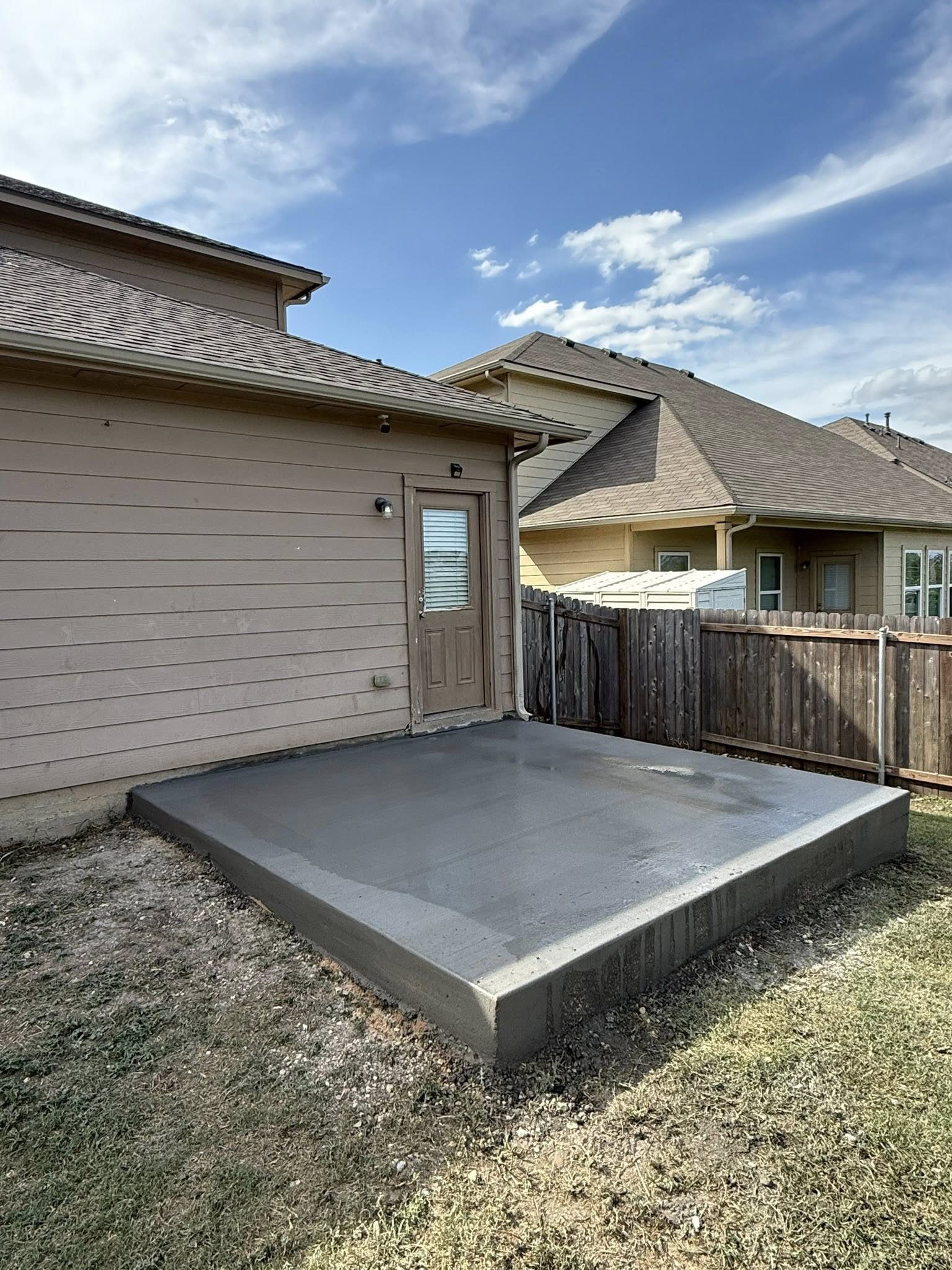
The most-installed pool deck in Austin and the most cost-effective. 4-inch poured concrete with a light broom texture for slip resistance. Lasts 25 to 35 years if poured properly. Hot in direct sun (the real downside in Texas), but you can mitigate with light coloring and shade. Easy to clean. Won't shift like pavers can.
Stamped or stained concrete
Same durability as broom-finish but with the visual variety of stone or tile. Stamped flagstone-look concrete looks great around pools and costs about half what real flagstone costs. The catch: stamped concrete needs resealing every 3 to 5 years to keep its color and texture. And stamped patterns add a tiny bit of slip resistance compared to smooth surfaces.
Concrete pavers
Interlocking concrete pavers installed over a compacted base. The advantages around pools are real: drainage between pavers is better, individual pavers can be pulled and replaced if they crack, and the texture is naturally slip-resistant. The trade-offs: pavers shift over 5 to 10 years and need re-leveling, and joint sand needs replenishing. Mid-priced light-colored pavers stay 15 to 25 degrees cooler than standard concrete.
Travertine pavers
The premium choice for Austin pool decks specifically because of heat resistance. Travertine is a natural stone with a porous structure that doesn't hold heat the way concrete does. Walking on travertine in 100-degree direct sun is genuinely comfortable. Tumbled-finish travertine adds visual character. The trade-offs: porous travertine needs sealing to resist pool chemical stains, and the natural stone varies more in color and finish than manufactured materials.
Natural flagstone or premium stone
Real Hill Country limestone, sandstone, slate, or custom-cut natural stone laid over a concrete base. The most premium look. Used on high-end pool decks in West Austin and Lakeway homes. Costs 2 to 3x concrete. Worth it if the home is positioned for it.
Composite decking (Trex, TimberTech)
Less common around pools but growing in Austin. Composite boards installed on a framed substructure raised above the pool's existing concrete shell. The advantage: composite stays much cooler than concrete in direct sun (often 20 to 40 degrees cooler) and you get the wood-deck look around the pool. The trade-offs: higher upfront cost, the substructure requires careful waterproofing, and you can't pour composite right against the pool shell — it needs coping in between.
Wood (we don't recommend it)
Wood pool decks (cedar, pressure-treated, or hardwood) look beautiful but are a maintenance trap around chlorinated water. Pool chemicals strip stain and finish faster than weather alone. Sun bleaches the wood within a year. We don't quote wood pool decks anymore — composite gives you the wood look without the headache.
How to save money without buying yourself a problem
- Pick broom-finish concrete with light coloring. Adding integral coloring (cream, beige, light tan) keeps the deck cooler than standard gray for $1.50 to $3 per square foot extra. Big lifestyle improvement, modest cost.
- Reuse the existing concrete sub-slab. If we're replacing a paver or flagstone deck and the underlying concrete is structurally sound, we can pave over it. Saves $2,000 to $4,500 on the demo and base work.
- Skip stamped patterns on the basic tier. A simple broom finish in a warm color often beats a budget stamped pattern for the same money. Spend on coloring, not stamping.
- Don't skimp on drainage. A $600 drainage upgrade today saves $4,000+ in foundation repairs later. This is not where to save.
- Bundle the pool deck with related hardscape. If we're also building a patio cover, an outdoor kitchen, or a path from the house, doing it all in one mobilization saves real money on dump fees and concrete delivery.
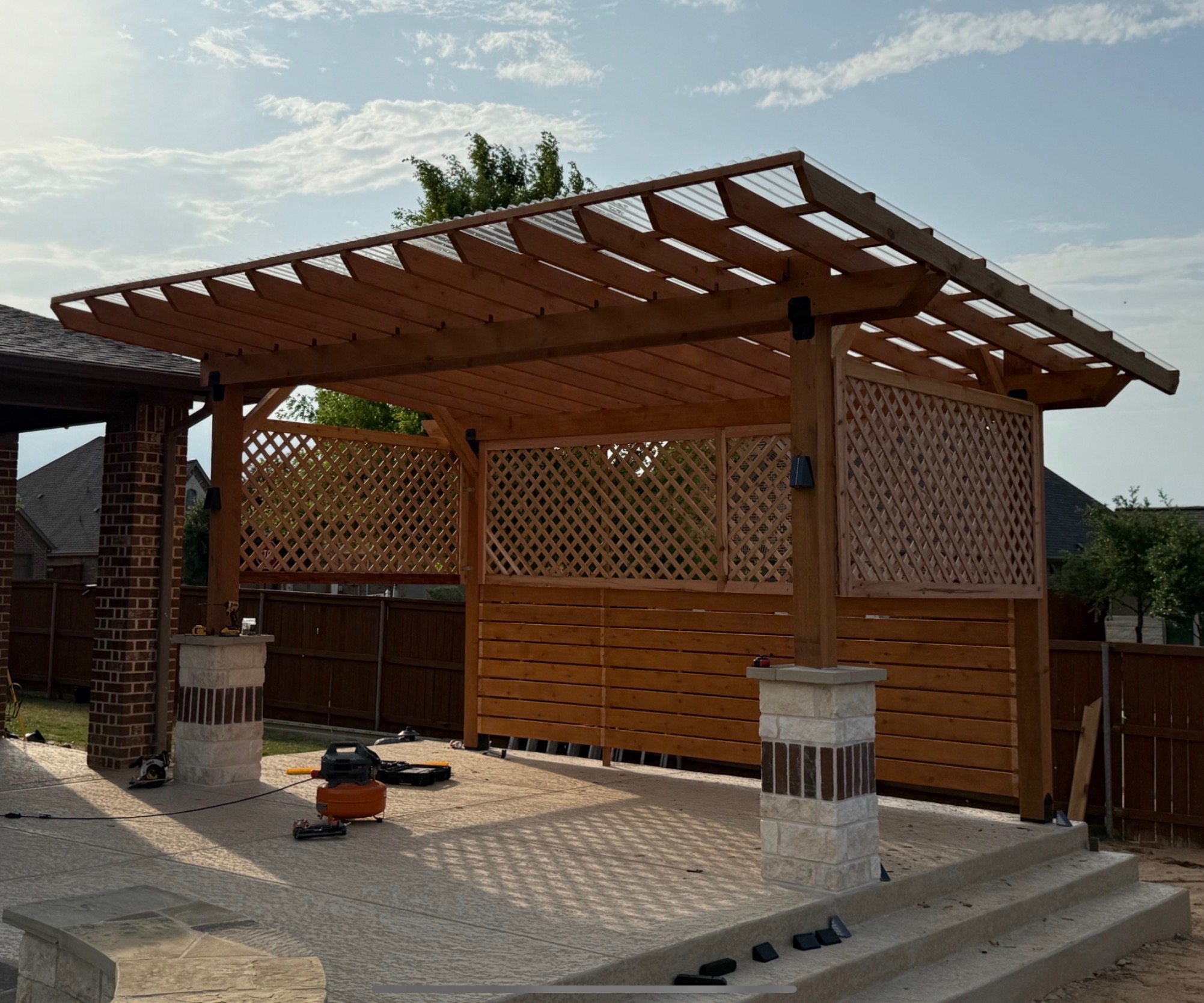
- Plan for shade. A small pergola or shade sail can make a regular concrete deck dramatically more usable in July. Often cheaper than upgrading to travertine for the heat-comfort benefit.
What's worth paying for around a pool
- Quality coping. The edge piece sees the most water and the most contact. Cheap precast coping cracks within 5 years. Spend the extra $1,000 to $2,500 for travertine or quality precast.
- Proper base prep. A pool deck on inadequate base prep cracks, settles, and pools water in the wrong places. Don't accept a quote that doesn't specify base depth and compaction.
- Drainage that actually moves water. Yard drains, French drains, or properly graded slope. Without this, you have a swamp problem in spring.
- Pool chemical sealing. Stains from chlorinated splash water are real. Sealing porous materials (stamped concrete, travertine, natural stone) is necessary, and most installers don't include it. Add $1.50 to $4 per square foot for proper sealing.
- Slip-resistant texture. Smooth finishes are dangerous around pools. Spend on the texture. It's safety.
How long does a pool deck install take?
Most concrete pool decks pour in 1 to 2 days after 2 to 4 days of prep (demo, grading, drainage, forming, reinforcement). After the pour, the deck needs 5 to 7 days of light curing before normal foot traffic and 28 days to reach full strength. We typically tell clients the deck is fully usable in a week, and ready for furniture and routine use in two.
Paver and travertine decks take longer (4 to 8 days of install) but don't have the cure window. The deck is usable the day we finish setting joint sand. Premium natural stone installs can run 8 to 14 days.
Do you need a permit?
Pool deck replacement around an existing pool typically doesn't require a city permit in Austin and most surrounding jurisdictions. HOA architectural approval is usually required for any visible change. New pool deck construction tied to a brand-new pool install is permitted under the pool's overall permit.
For ground-up new construction with a pool and deck combined, the pool builder and the deck contractor coordinate the permit. We handle the deck side and pull any required HOA paperwork as part of the project.
How to spot a quote that's too cheap
If a contractor quotes you 30 percent below the ranges in this guide, ask:
- How thick is the pour, and what reinforcement is used? (Should be 4 inches minimum, #3 rebar or 6x6 wire mesh.)
- What's the base prep? (Should be 2 to 4 inches of compacted crushed limestone over compacted subgrade.)
- What's the coping material and price?
- How is drainage handled? Where does water actually go?
- What sealer is applied for pool chemical resistance?
- Is demo and haul-off included?
- What's the slip-resistance approach — broom finish, sandblasted, textured pavers?
- Is the HOA submission included?
If the answers come back vague, the cheap quote will probably crack within 5 years, develop drainage problems, or become a slip hazard. None of which are cheap to fix once the pool is full and the family is using it.
Want an honest pool deck quote? We come walk the project, check the existing pool shell condition, review drainage and grade, and write up a transparent quote. Free, no obligation.
Get my pool deck quote →The bottom line
A standard 600-square-foot broom-finish concrete pool deck in Austin will cost you somewhere between $7,200 and $12,000 in 2026. Paver and travertine pool decks run $13,200 to $28,800 for the same size. Premium natural stone installs run $19,200 to $36,000 or more, and that's before any custom features.
The biggest cost drivers are material, size, and demo complexity. The biggest quality drivers are the base prep, the drainage, the coping, and the sealing — all invisible details that decide whether the deck is here in 25 years or cracks in 5.
The honest take for most Austin pool homeowners: light-colored broom-finish concrete with quality coping and proper drainage is the best balance of price, durability, and Austin-summer usability. Spend the money saved on shade, lighting, or a pergola — those improve how often you actually use the pool more than premium decking does.